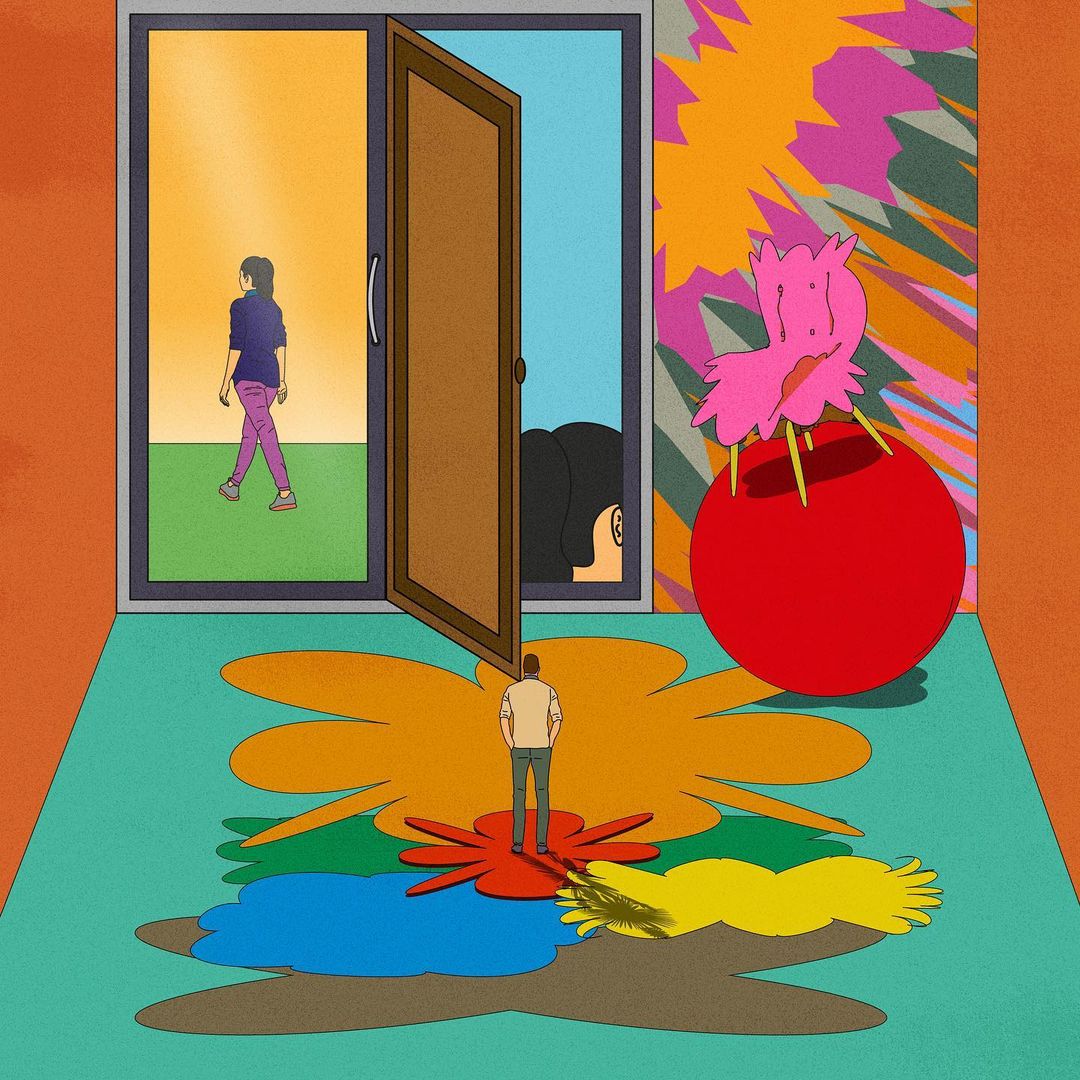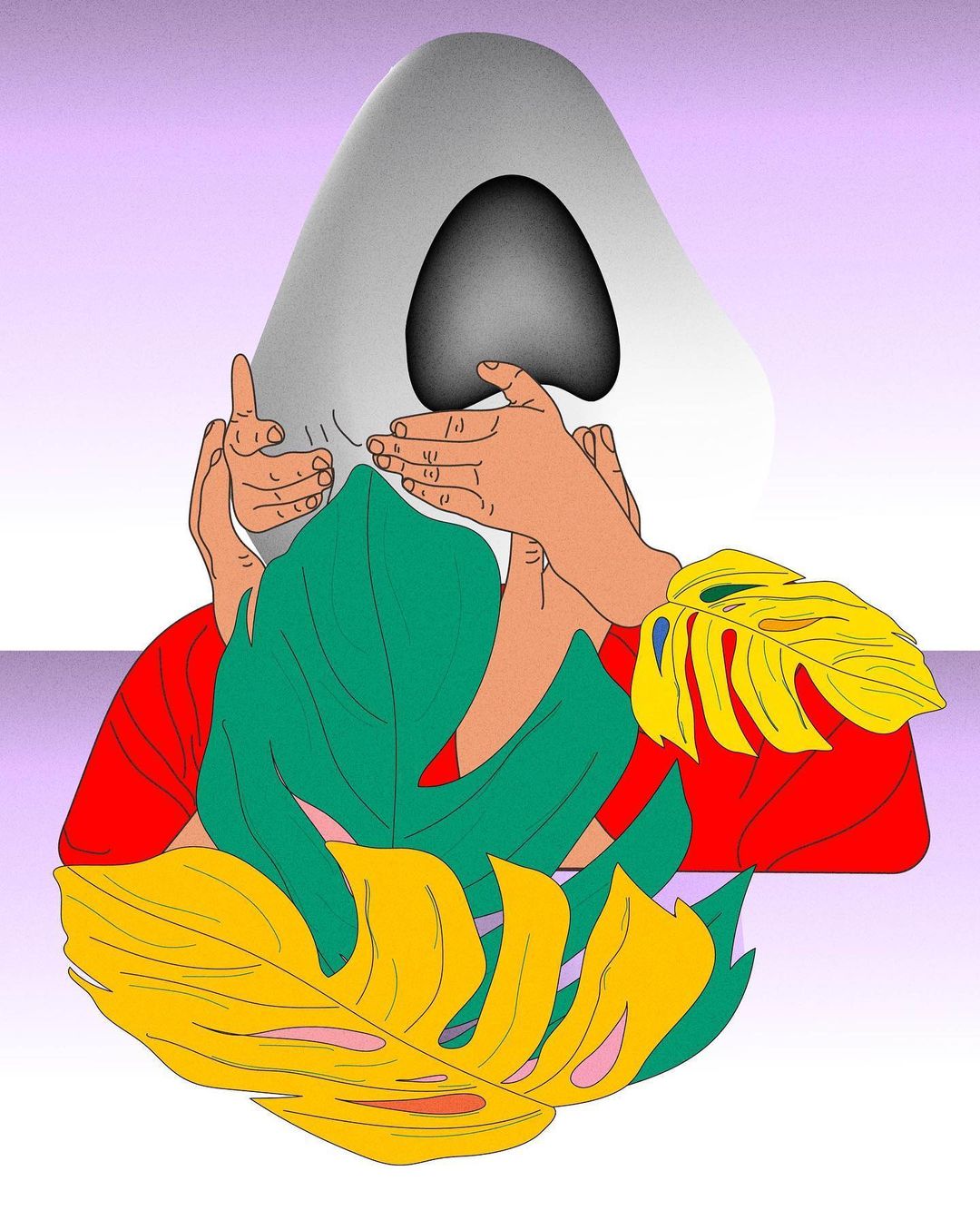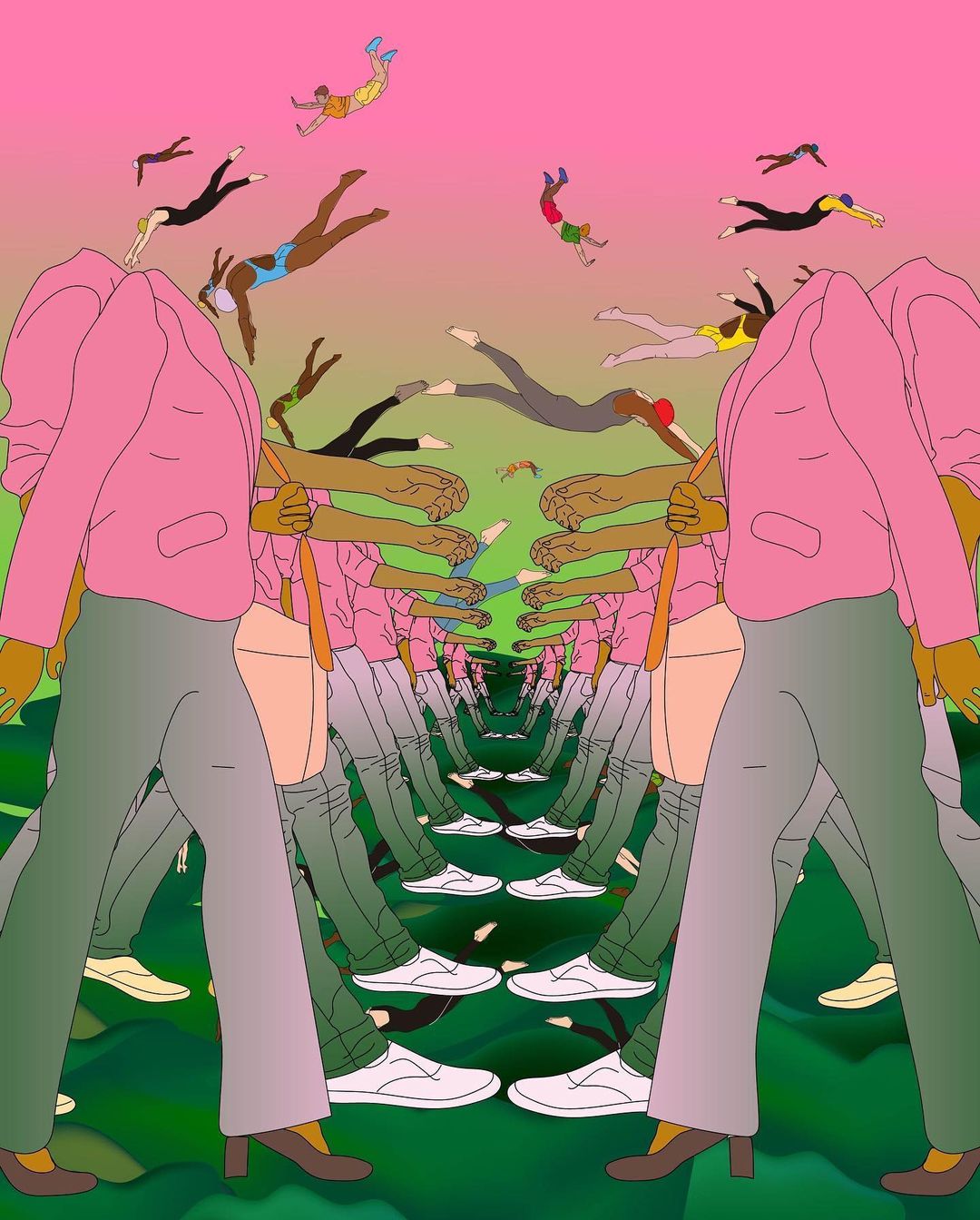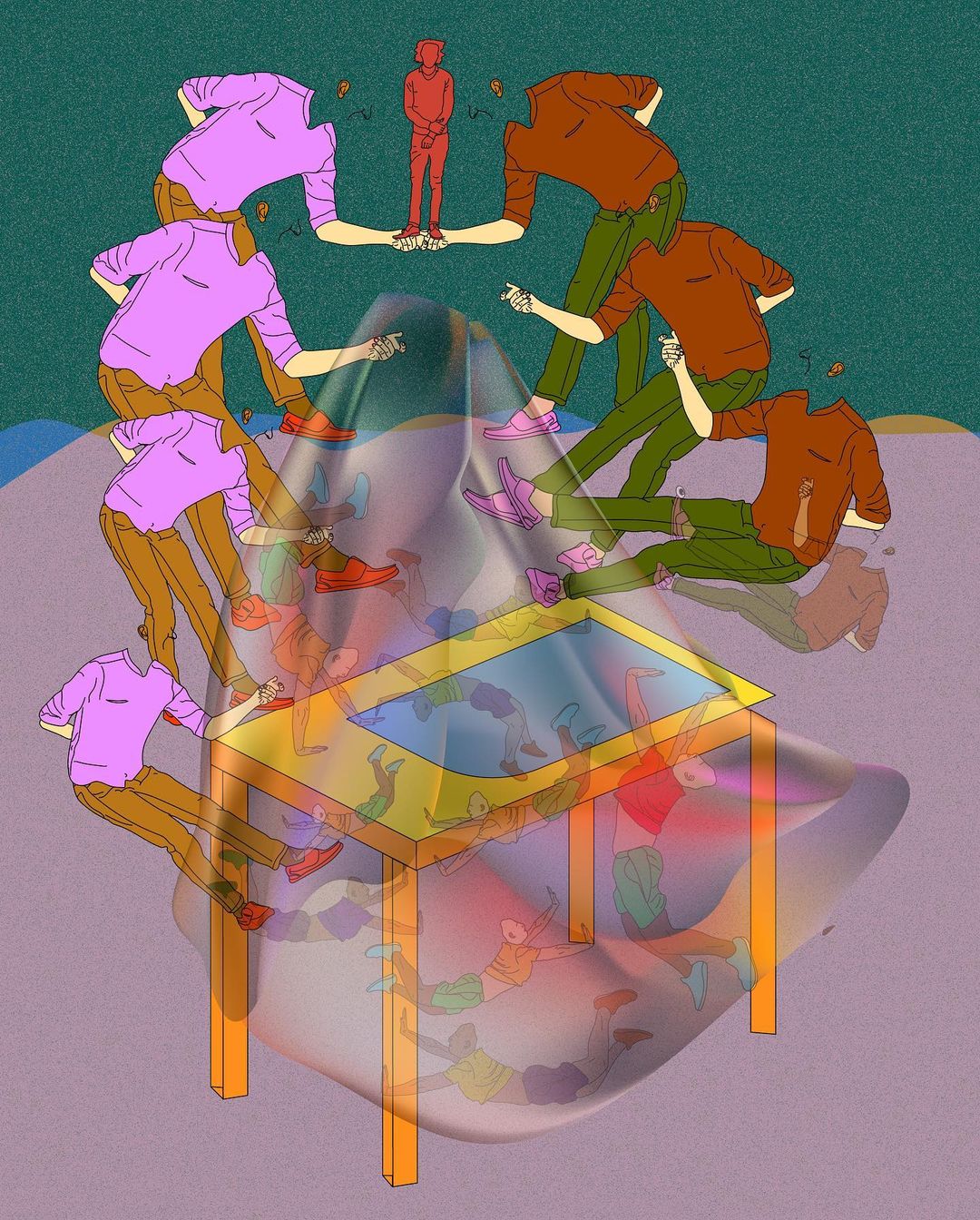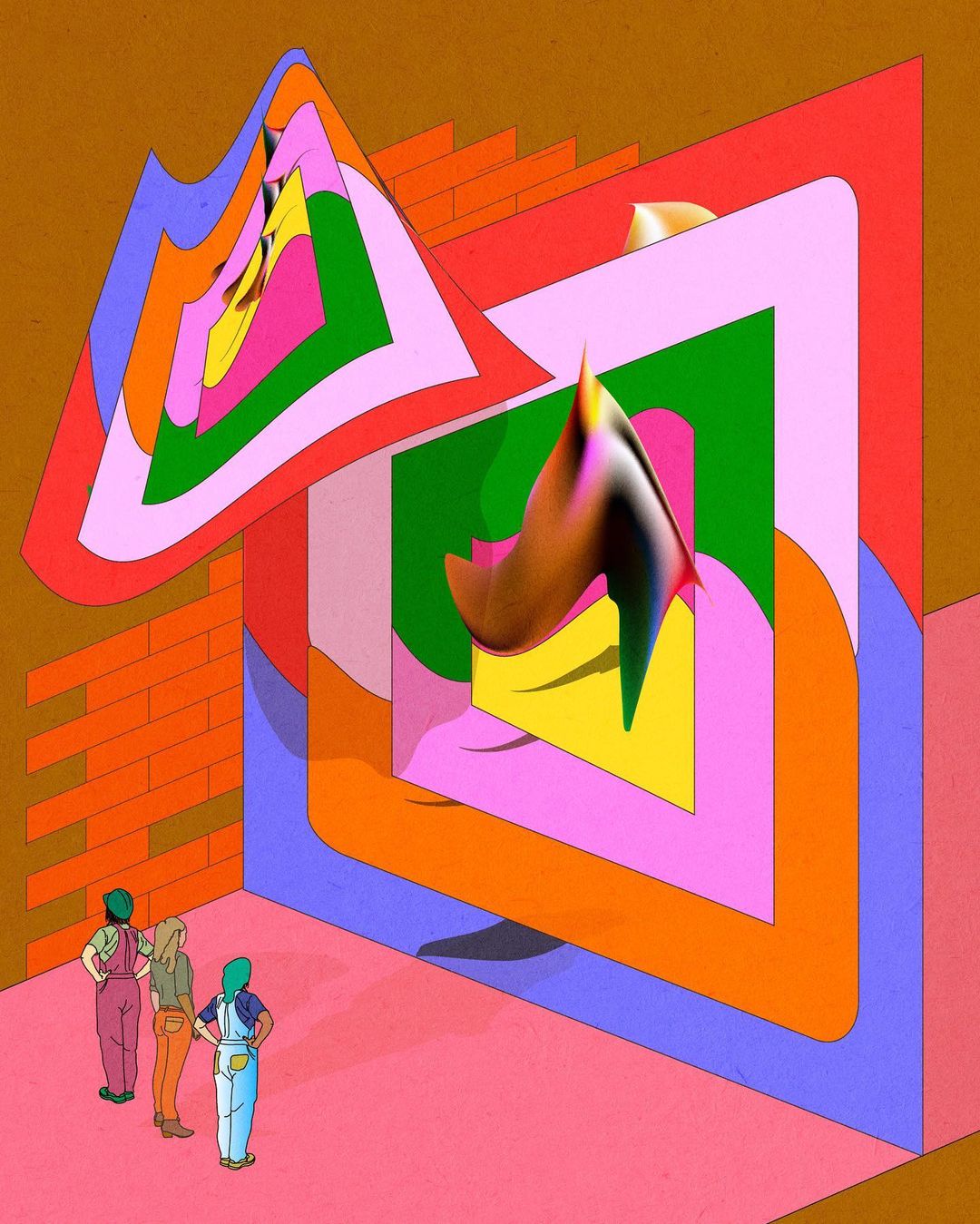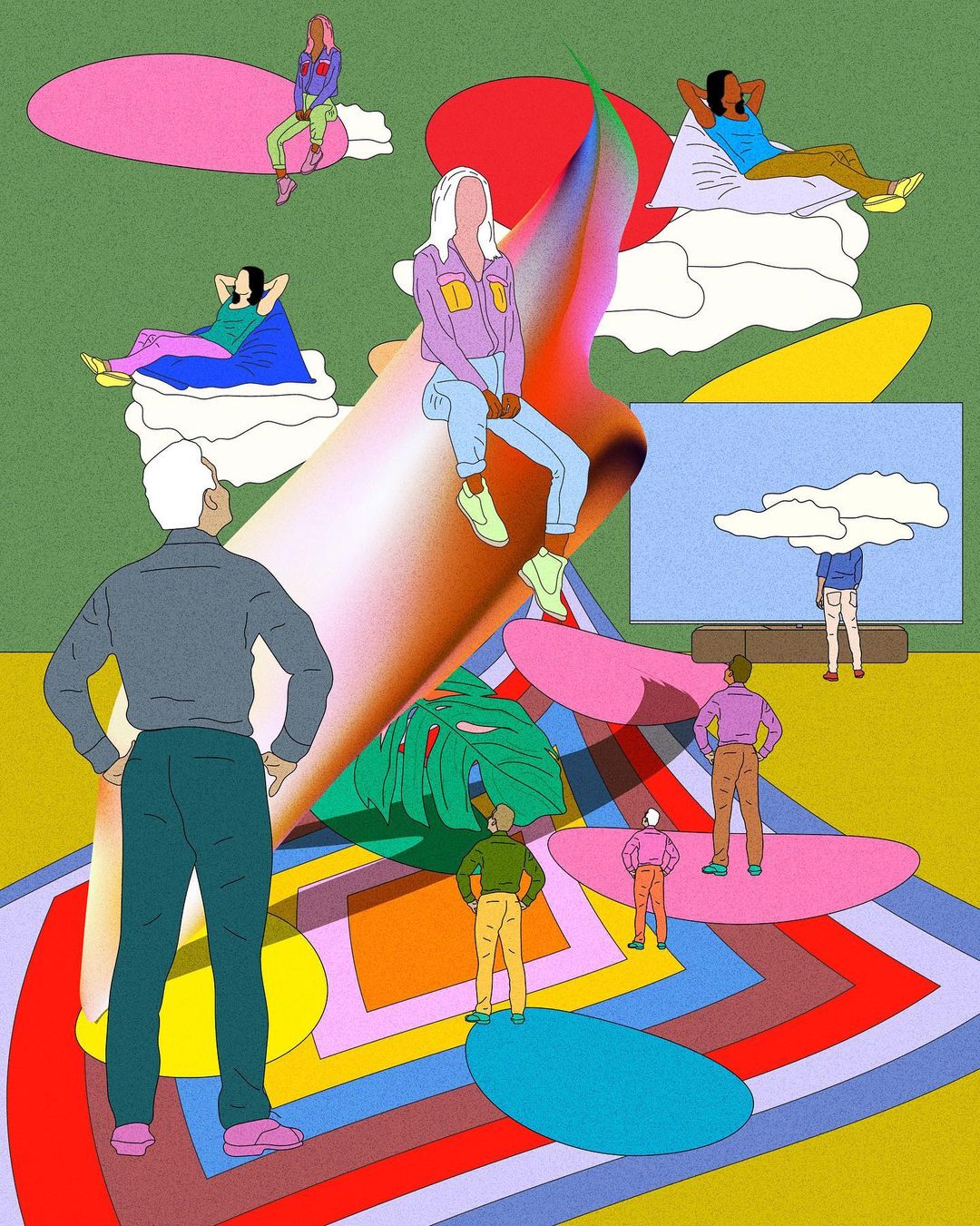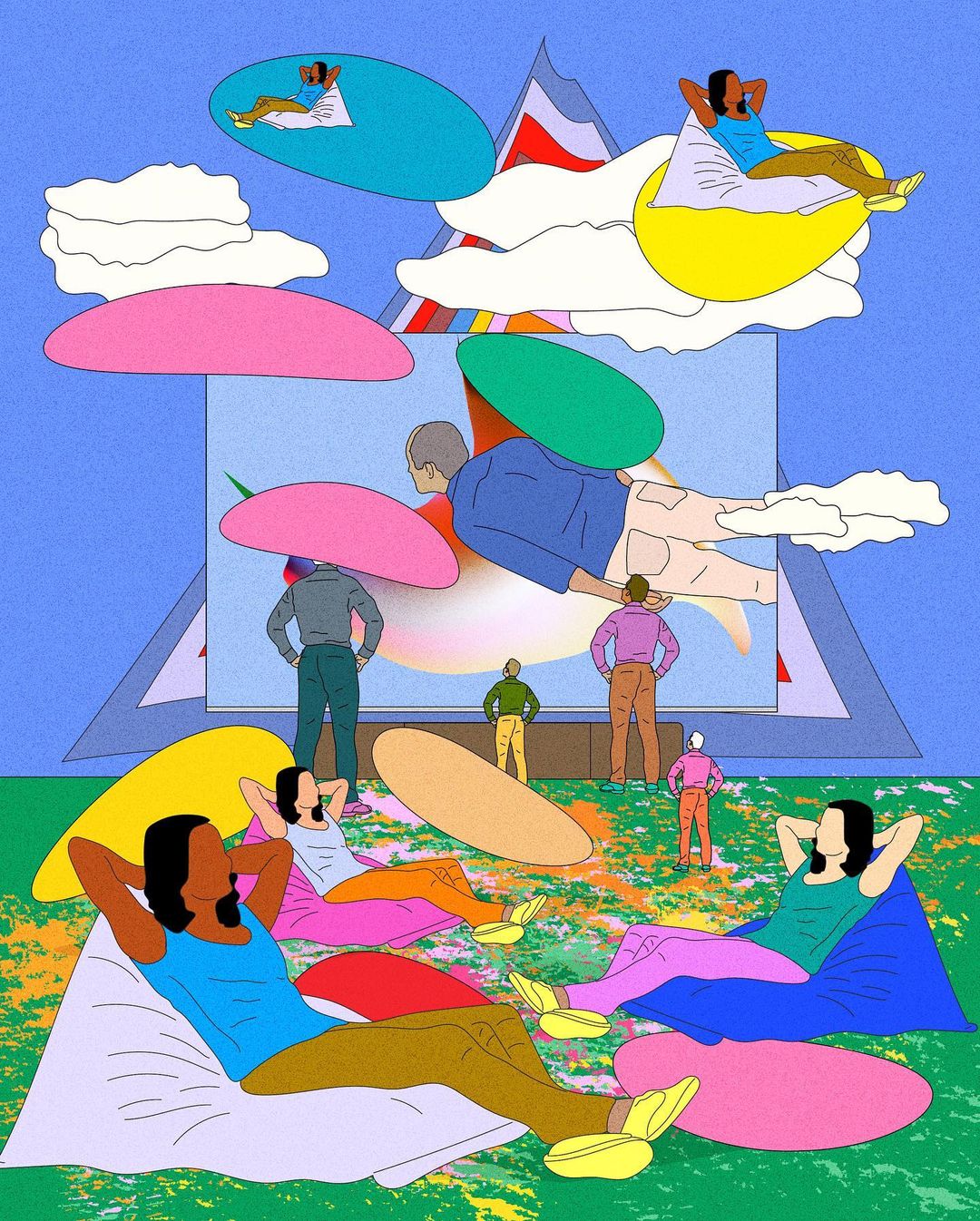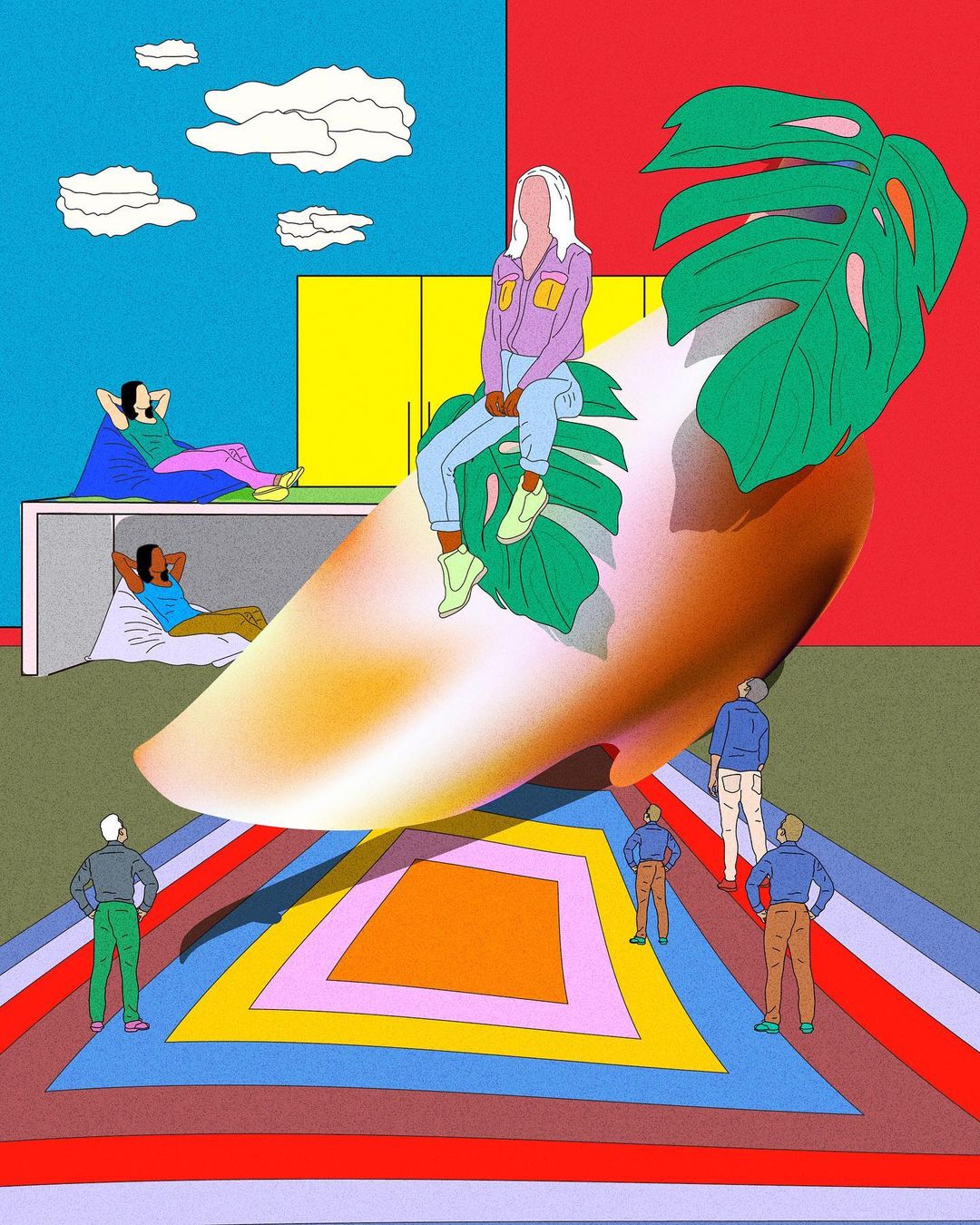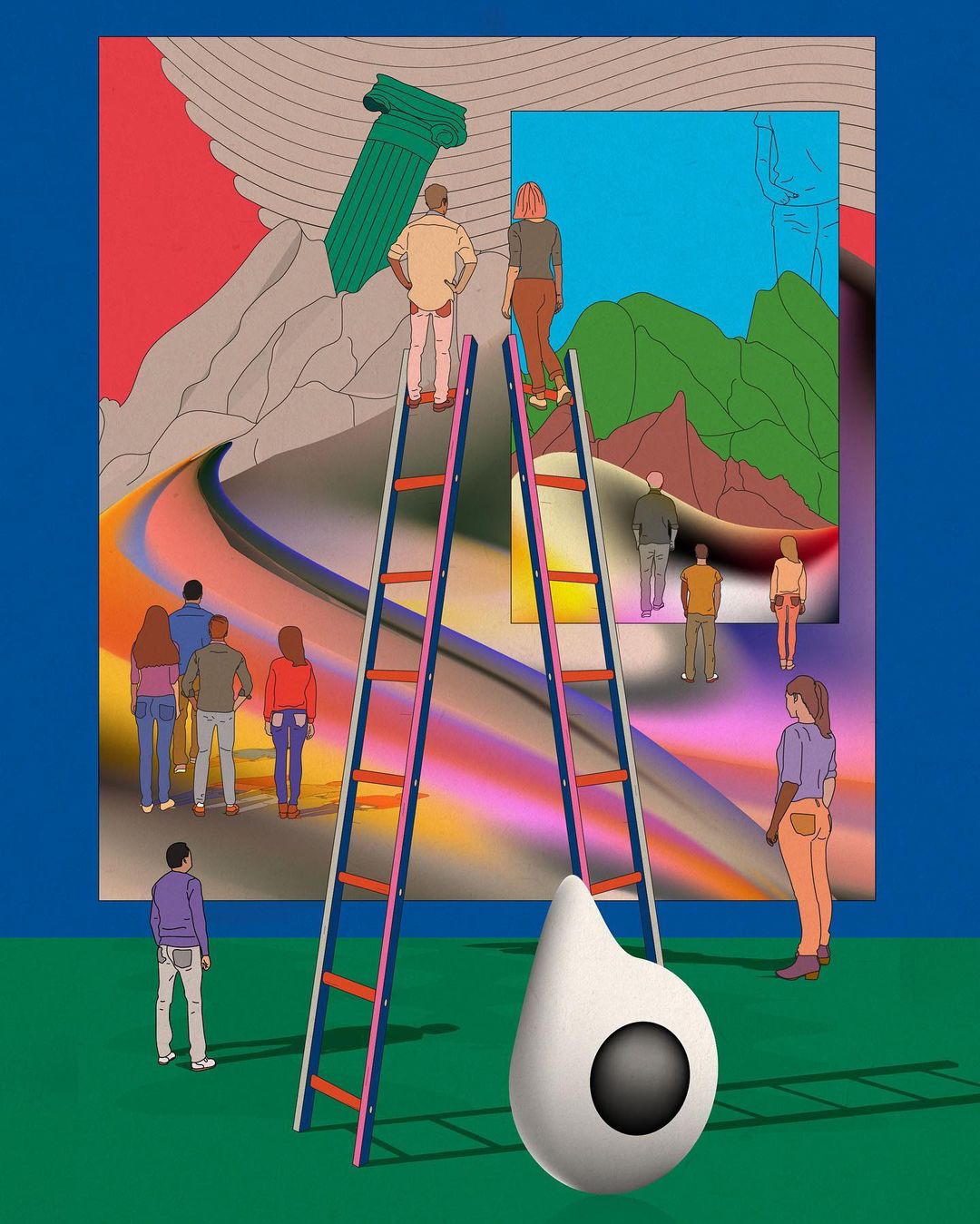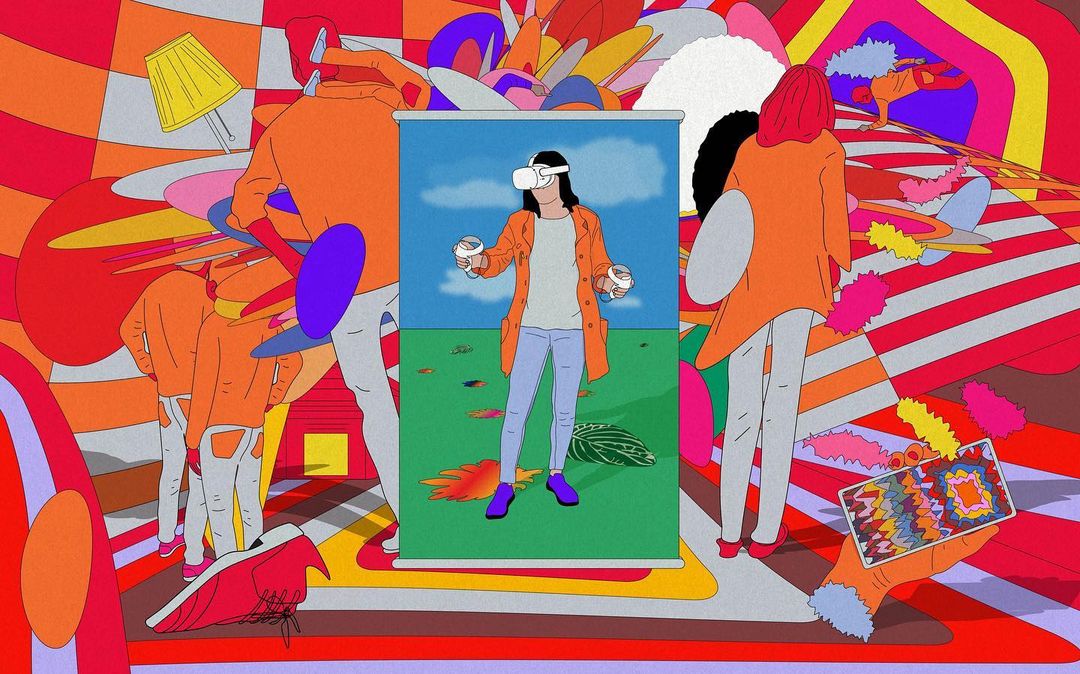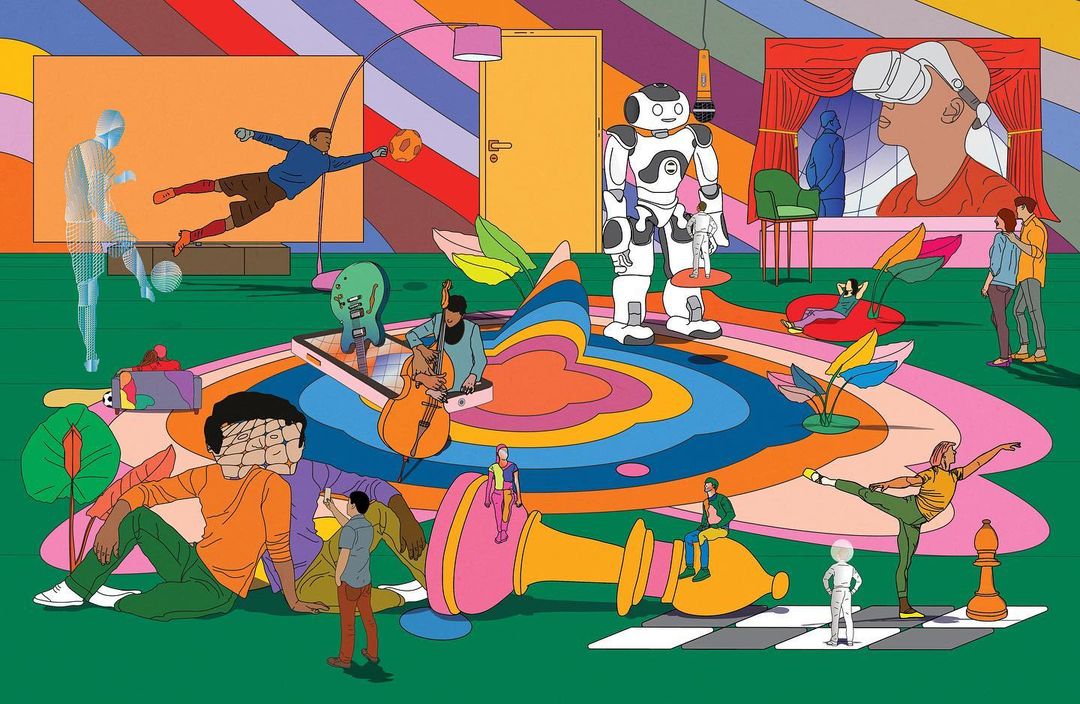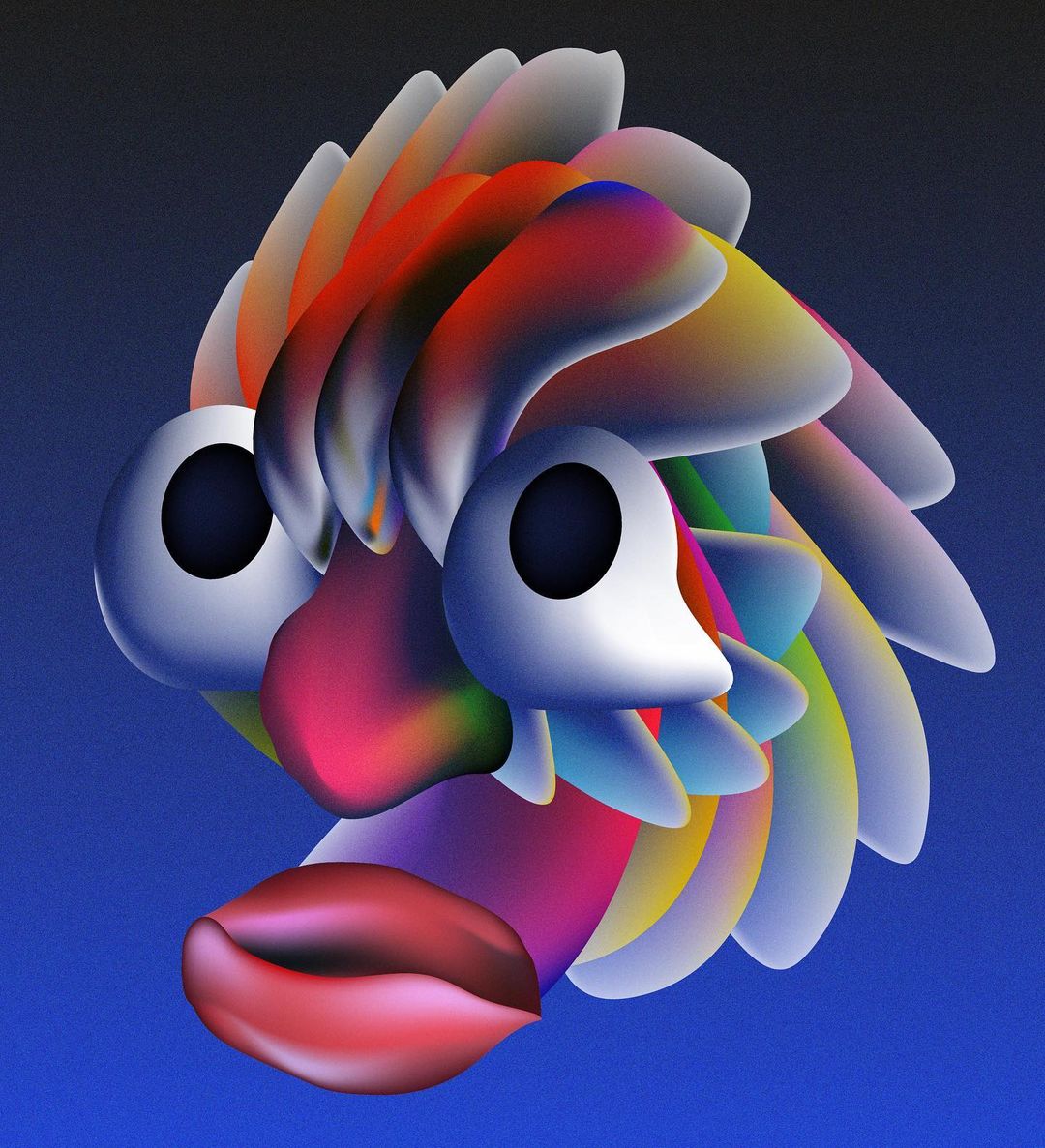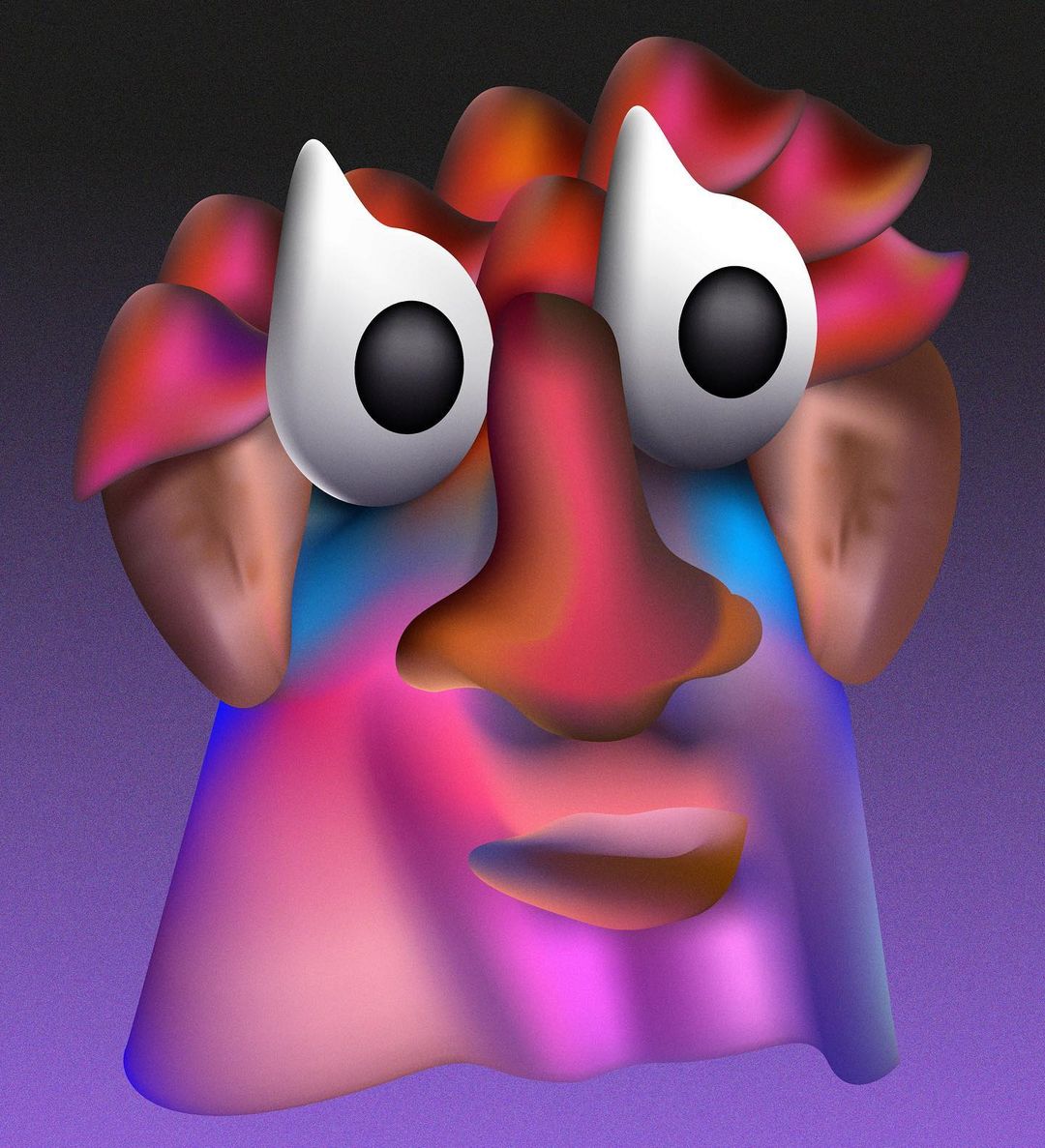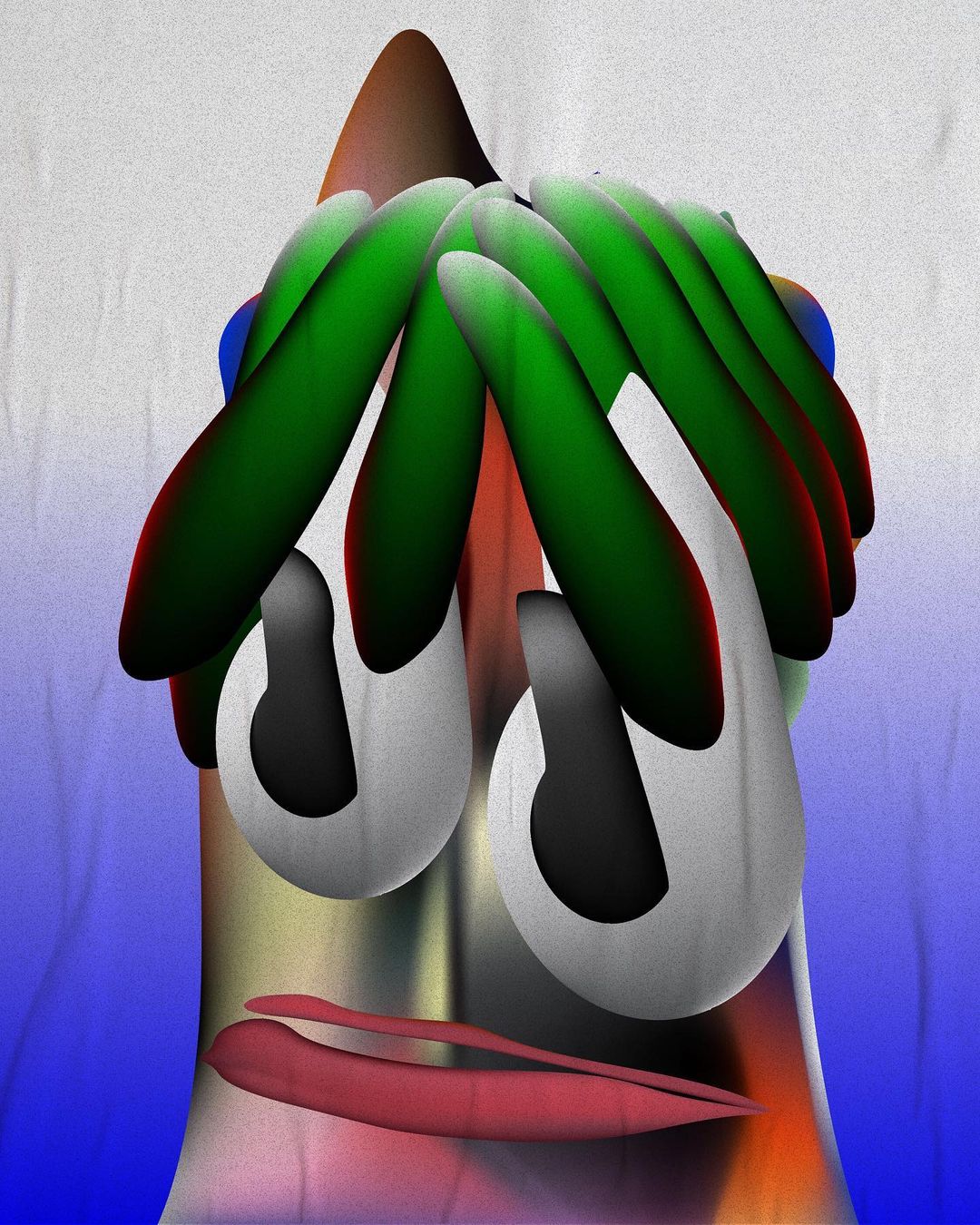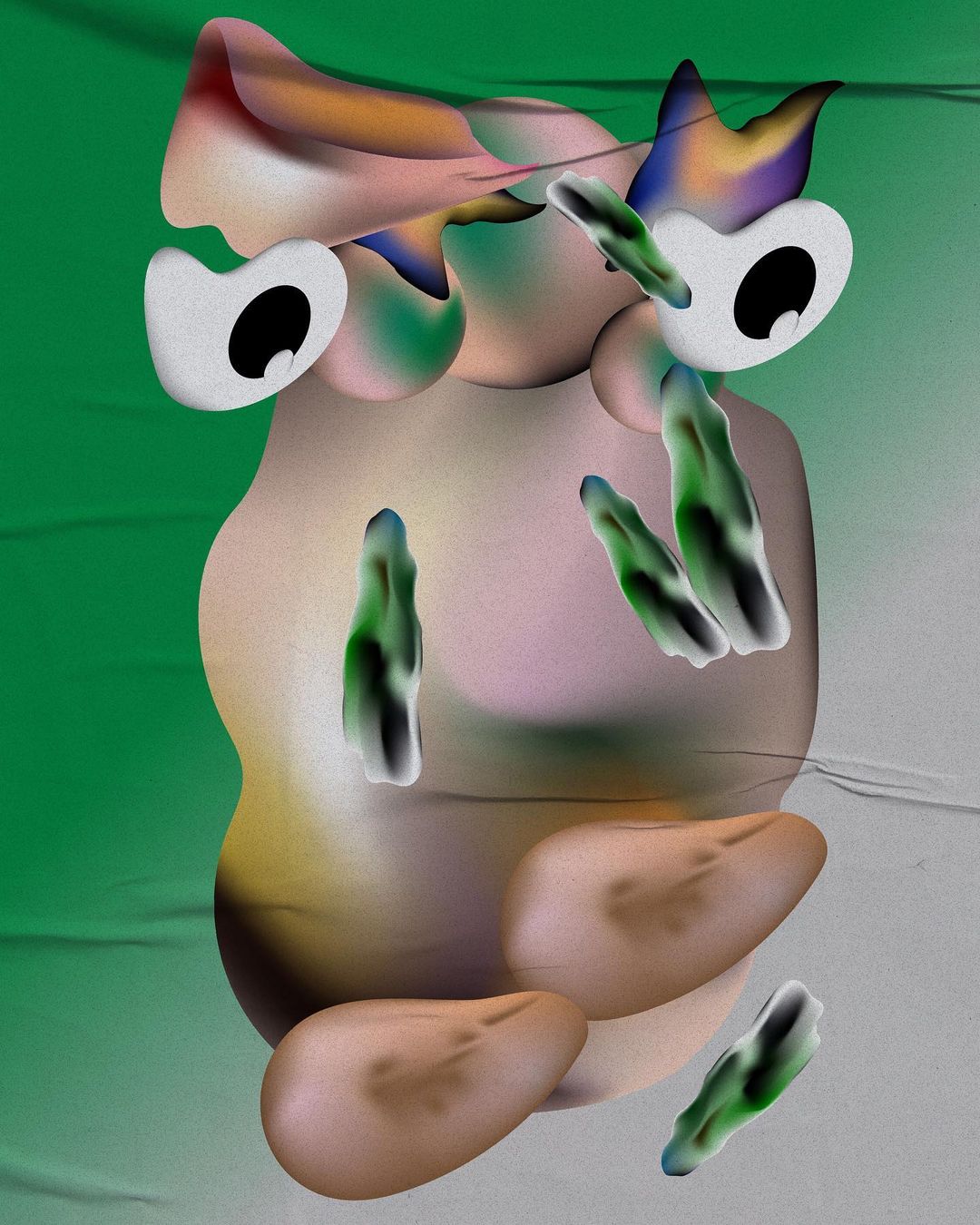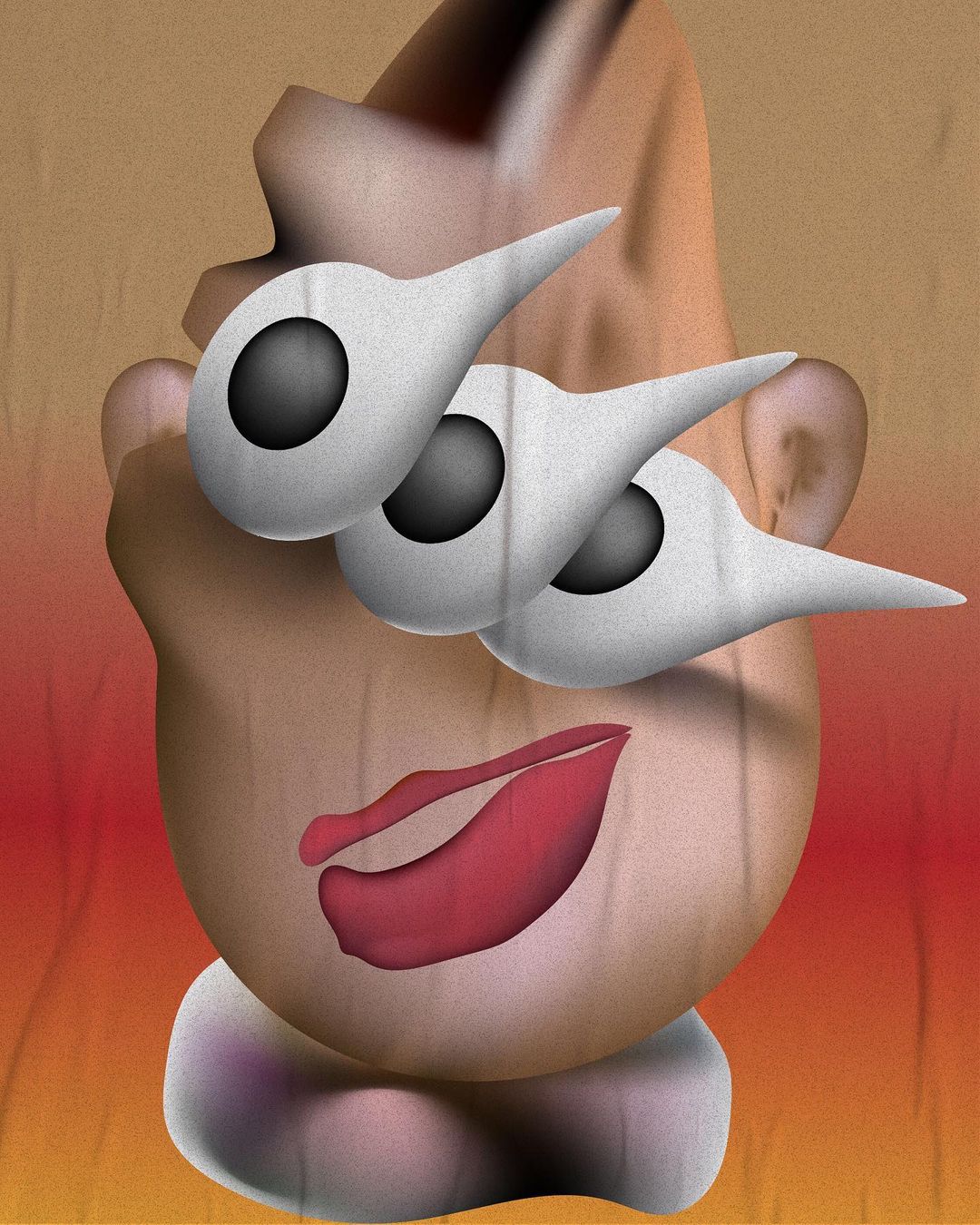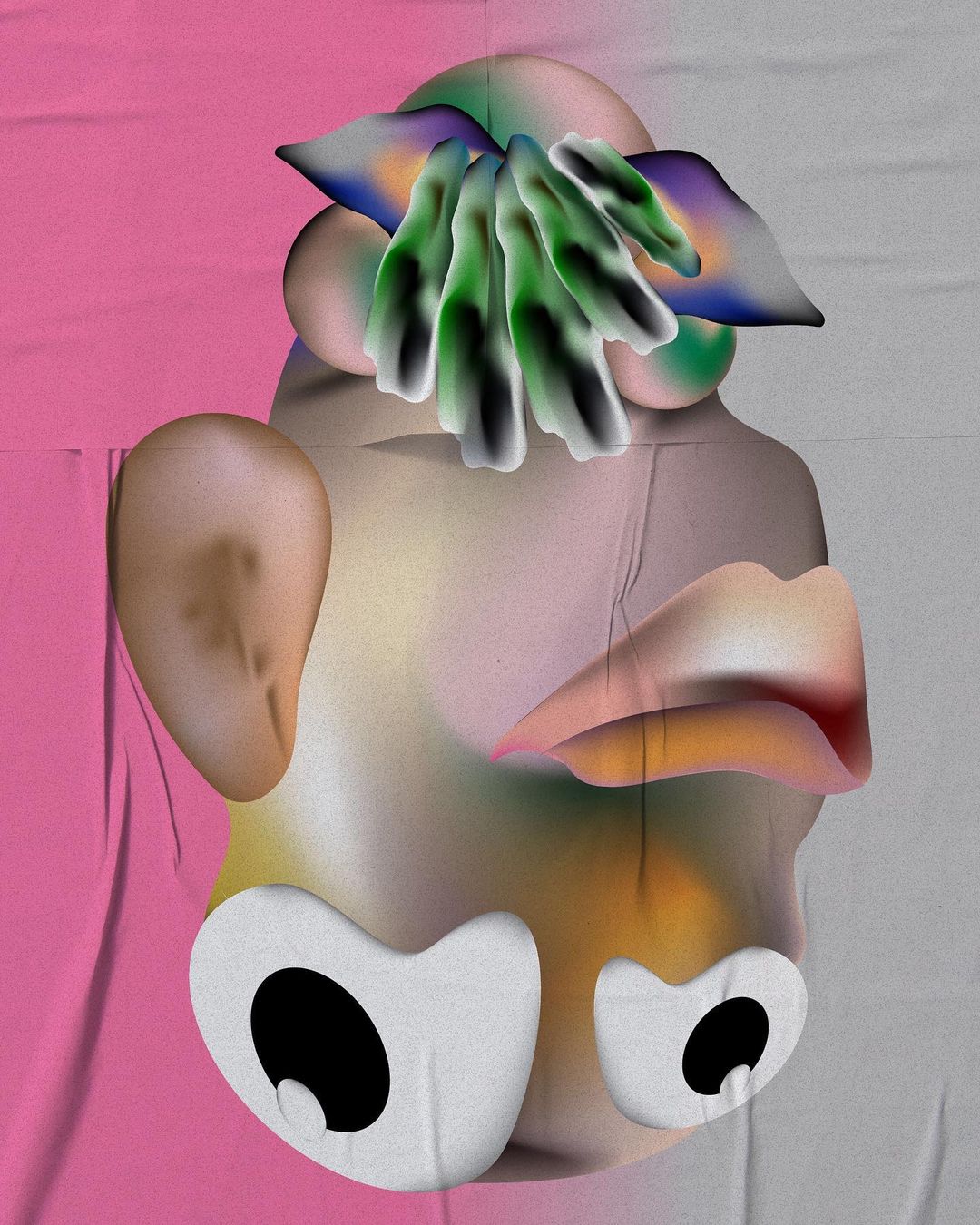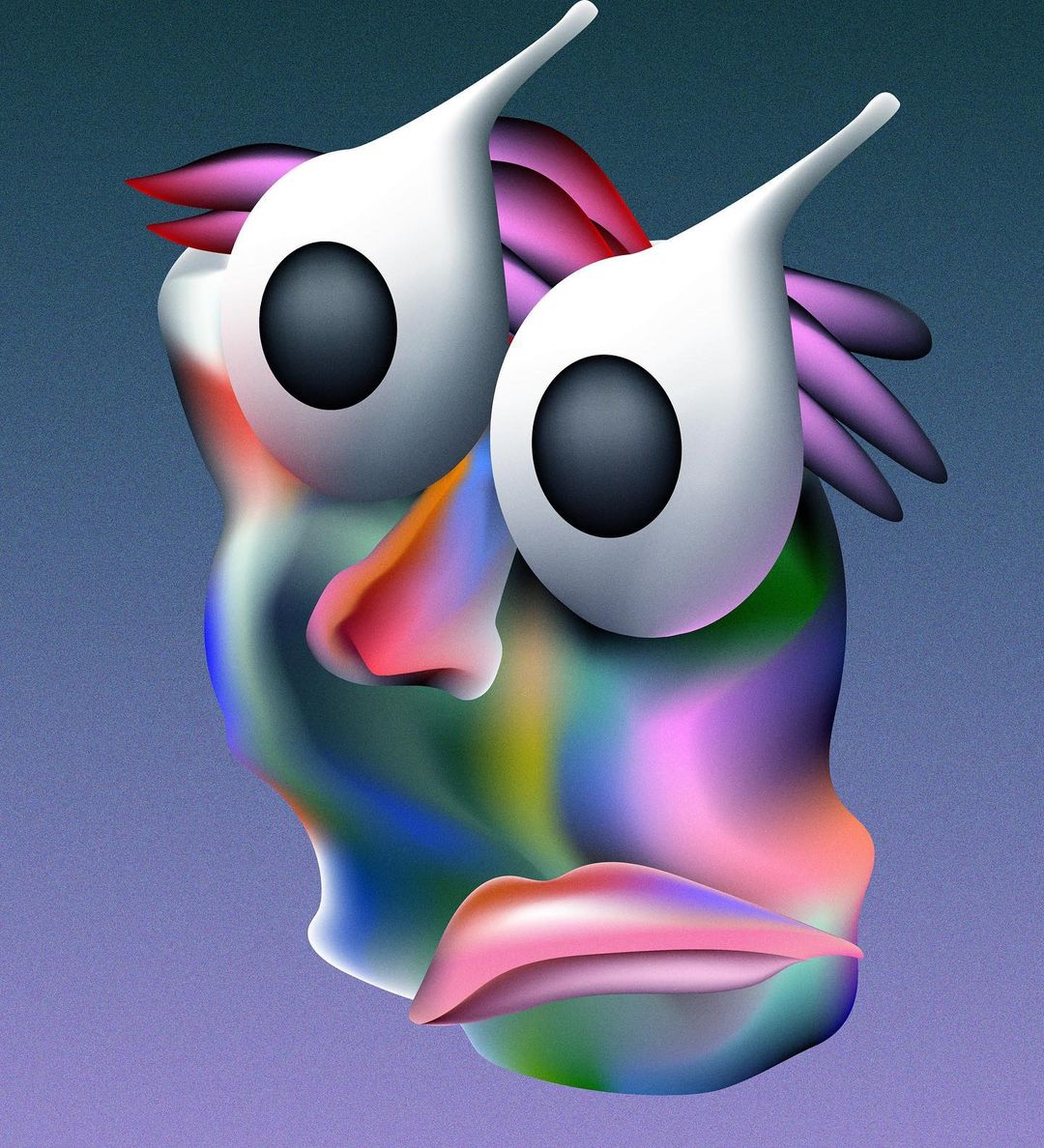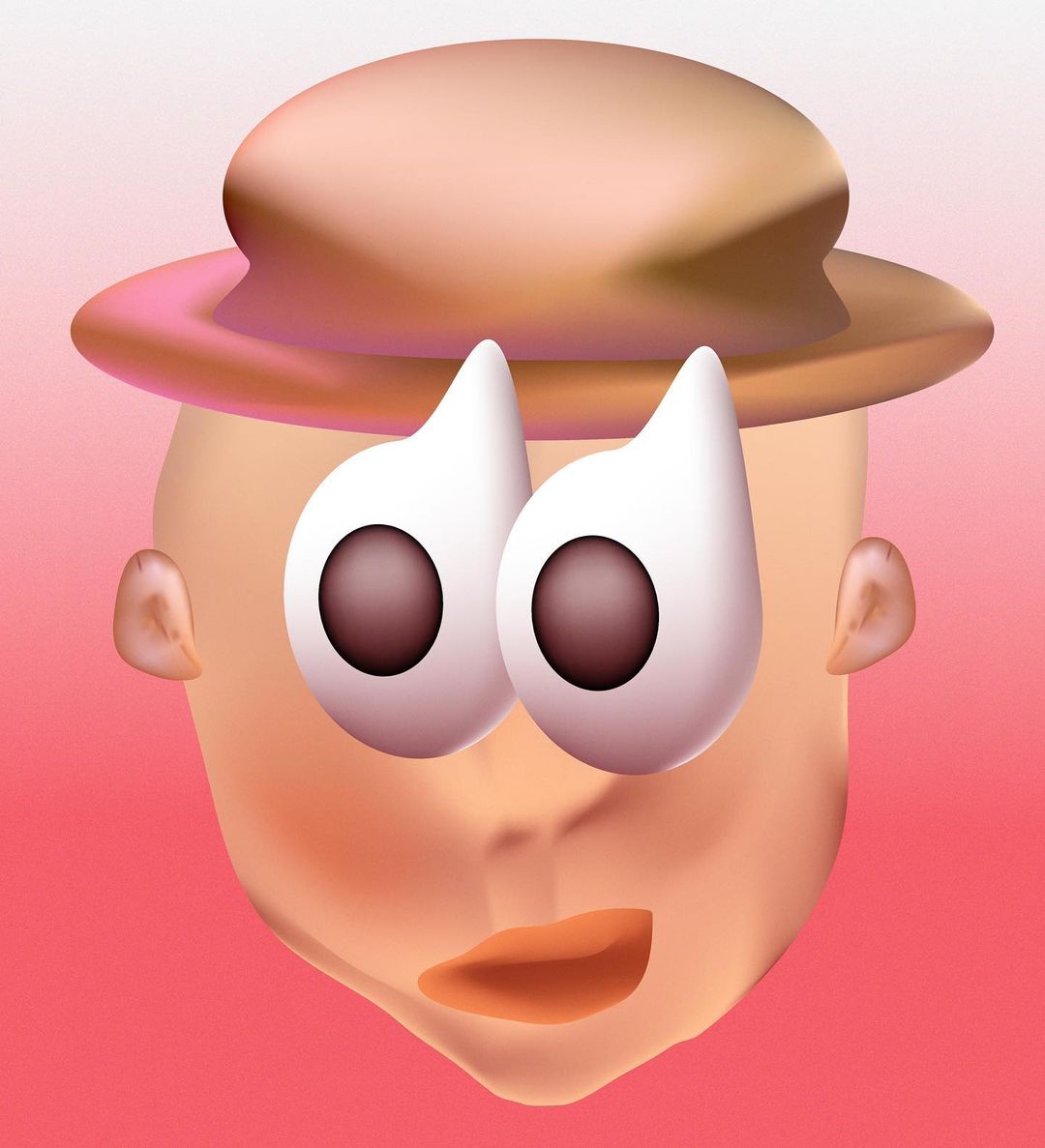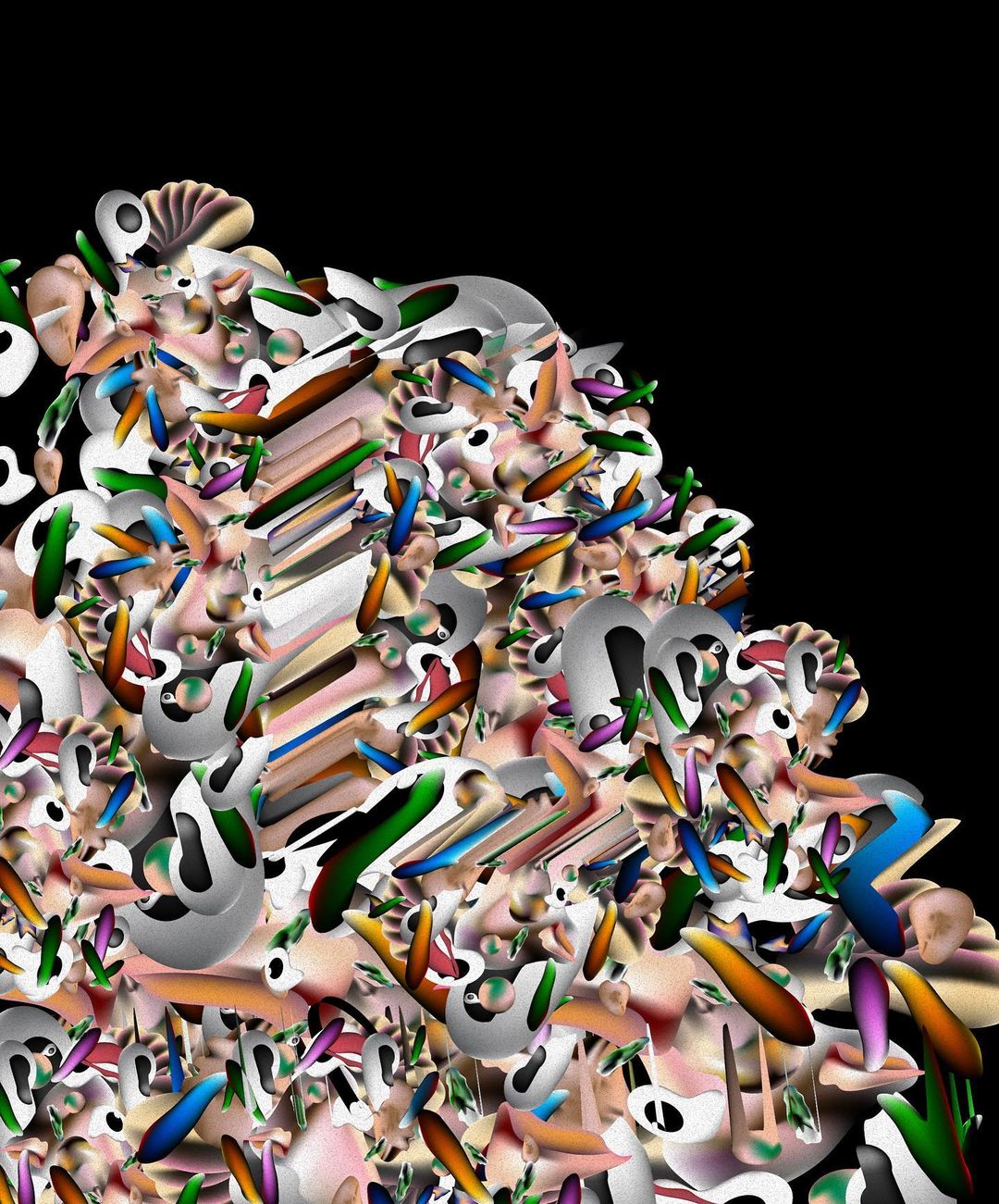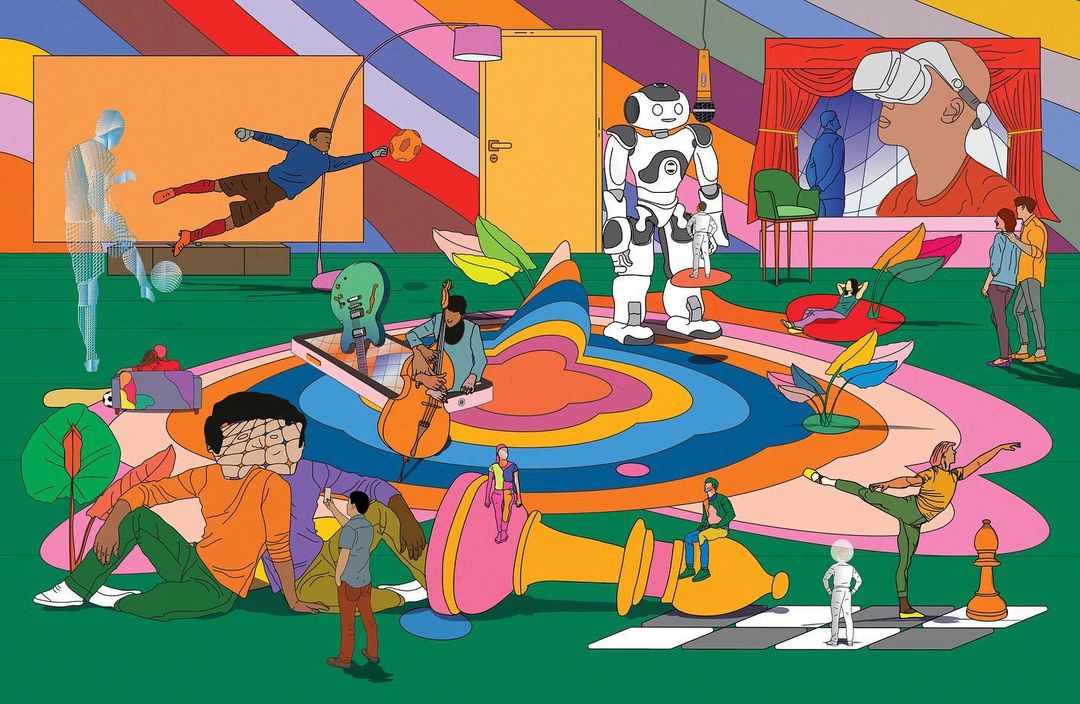
Sebastian Cestaro is a Buenos Aires-based illustrator and visual artist. We often come across abstract elements and figures in his works. Sebastian Cestaro’s style has a surreal side with a colorful cartoon-like color palette, abstract faces, and big eyes that he uses as a repetitive design element in most of his works also we can call them his signature. He told Its Nice That that “I use a lot of eyes because I find that they bring my illustrations to life. My characters like to look around. They are attentive.”
In the same interview with Its Nice That, he explains that he has been interested in cartoons since his childhood: “I was a big fan of Looney Tunes, Tom and Jerry and other cartoons of that style. They definitely left their mark on me. I think it was around that time I started to admire illustration as an art form.”
The artist has collaborated with many brands such as The New Yorker, The Washington Post, The New York Times, Zeit, VICE, Wired, HP, Medium, Victory Journal, The Baffler.
Marcelo Lavin is an artist and a digital animator from Mexico, who draws vibrant colored digital illustrations. Influenced by surrealism, his artworks are intriguing visuals of contemporary Mexican culture.
French-born, Chicago-based Julia Dufossé is a self-taught designer & illustrator. Combining the inspiration from the airbrush aesthetics of the 70s and 80s with her own style in digital, she creates dazzling, dreamy, glowy, and slightly hazy illustrations.
Internet provided a huge space to express ourselves. It doesn’t matter which medium and technique, artists and designers can share their work and someone stumbled upon their work and made their day. Everyone mixes and mashes what they see and experience but the outcome is always different. Even the same feelings can cause different artworks. …
Sebastian Cestaro’s Cartoon World
Sebastian Cestaro is a Buenos Aires-based illustrator and visual artist. We often come across abstract elements and figures in his works. Sebastian Cestaro’s style has a surreal side with a colorful cartoon-like color palette, abstract faces, and big eyes that he uses as a repetitive design element in most of his works also we can call them his signature. He told Its Nice That that “I use a lot of eyes because I find that they bring my illustrations to life. My characters like to look around. They are attentive.”
In the same interview with Its Nice That, he explains that he has been interested in cartoons since his childhood: “I was a big fan of Looney Tunes, Tom and Jerry and other cartoons of that style. They definitely left their mark on me. I think it was around that time I started to admire illustration as an art form.”
The artist has collaborated with many brands such as The New Yorker, The Washington Post, The New York Times, Zeit, VICE, Wired, HP, Medium, Victory Journal, The Baffler.
You can follow Sebastian Cestaro’s work from his website, Instagram, and Behance account.
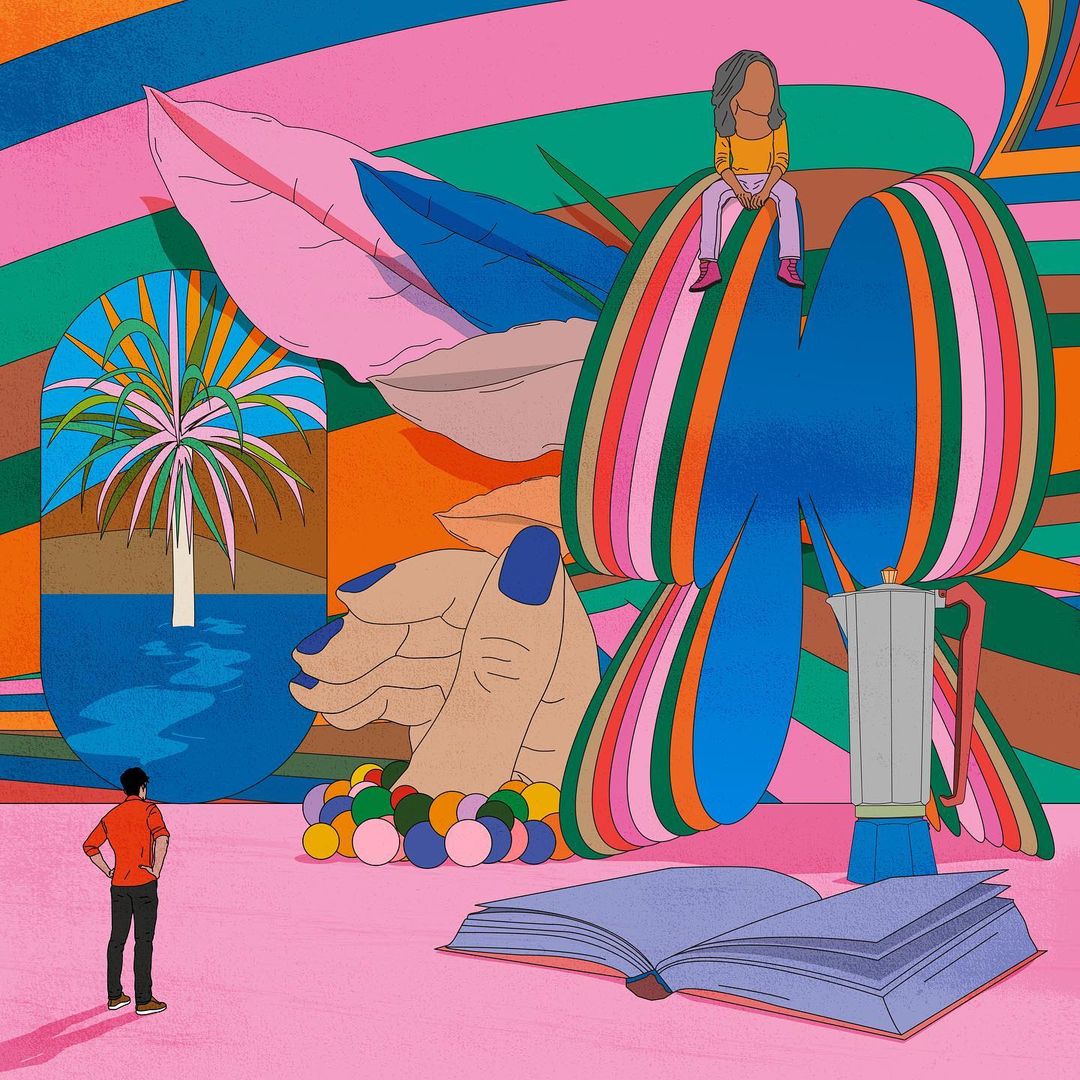
You can also find us on Twitter and Instagram.
Related Posts
Marcelo Lavin’s Revelations of Subconsciousness on Beamful Illustrations
Marcelo Lavin is an artist and a digital animator from Mexico, who draws vibrant colored digital illustrations. Influenced by surrealism, his artworks are intriguing visuals of contemporary Mexican culture.
Yiting Nan Creates Simple Yet Captivating and Humble Animations
Chinese-born, New York-based designer and animator Yiting Nan shows these moments of happiness and stillness in her animations.
Julia Dufossé’s Glowing Airbrushed Aesthetic
French-born, Chicago-based Julia Dufossé is a self-taught designer & illustrator. Combining the inspiration from the airbrush aesthetics of the 70s and 80s with her own style in digital, she creates dazzling, dreamy, glowy, and slightly hazy illustrations.
Inspiration Farmer #3: Ken Price, David Brandon, Alex Selkowitz and more
Internet provided a huge space to express ourselves. It doesn’t matter which medium and technique, artists and designers can share their work and someone stumbled upon their work and made their day. Everyone mixes and mashes what they see and experience but the outcome is always different. Even the same feelings can cause different artworks. …